
Contents
| Radar Test System - 24GHz, 76.5GHz, 79GHz (RTS)ME7220A | |
| rat01 | |
The Ideal Solution for Your Testing Environment …Research and Development:·Allows adjustments of distance, speed, frequency and output indoors when developing radar ·Fully characterizes the radar module by quantifying transmitter, receiver and antenna performance ·Built-in laser allows accurate alignment of the radar-under-test to the RTS antennas without additional mechanical fixtures Radar Module Manufacturing: ·Integrates into standard production lines or automated radar test stations for complete testing of the radar modules ·Allows full or sample testing of all critical radar parameters accurately and repeatedly in a confined and controlled environment ·Interfaces with external test accessories including spectrum analyzers and power meters for complete test flexibility ·Easily controlled from an external computer or by using the included handheld manual controller Vehicle Manufacturing: ·Verifies operation under realistic conditions by simulating moving targets (other vehicles or roadside objects) at multiple target distances ·Characterizes both radar transmitter and receiver performance ·Integrates with moving target simulator for expansion of complex testing conditions including changing distance between cars, changing lanes or multiple target tracking. |
|
| Moving Target for Collision Avoidance Radar Test (MT for RT) ME7220E/G | |
| rat10 | |
|
|
.jpg) KEYCOM's ME7220A is a multifunctional radar test system that allows you to
KEYCOM's ME7220A is a multifunctional radar test system that allows you to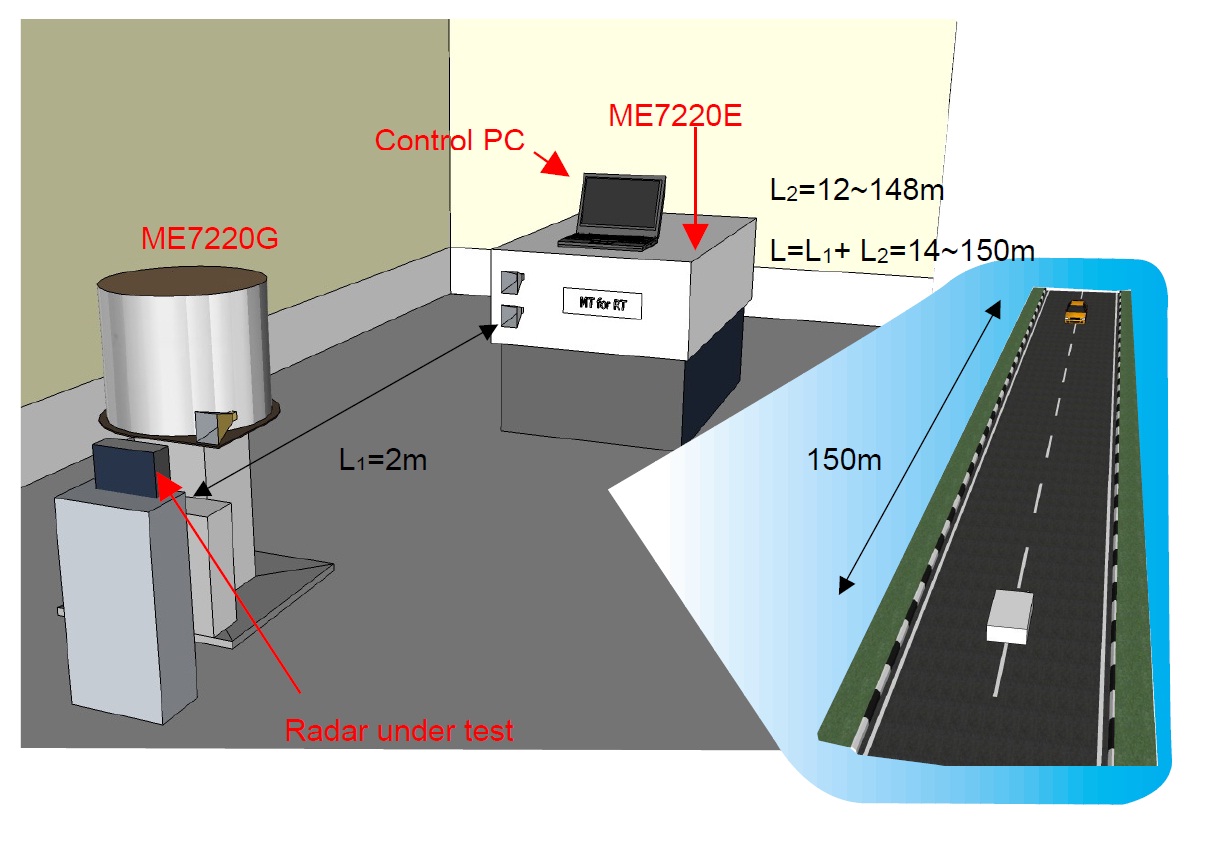
| Moving Multiple Target, Multiple Lane Type ME7220H |
| rat11 |
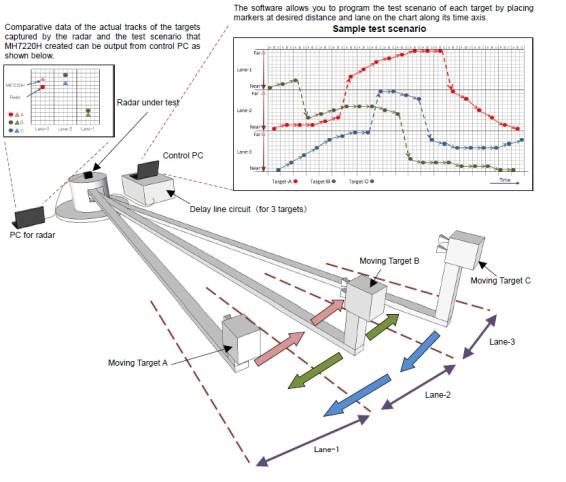 The ME7220H virtually simulates multiple automobiles traveling across lanes,
 enabling you to verify the performance of your radar control system under realistic conditions. |
 Data sheet (English)
(Japanese)
Data sheet (English)
(Japanese) |
| Radar alignment system (RAS)SM5899 |
| rat02 |
 ①The adjustment to align of the radar of the neighborhood of car bumper
②Characteristic test on radar cover (insertion loss and beam tilt) |
| Passive Radar Test System(Passive RTS) - 24GHz, 76.5GHz, 79GHz |
| rat09 |
 KEYCOM provides a passive RTS with a very little frequency dependency in
delay time and less insertion loss than a metal waveguide. Its distinguished features were made possible by applying a dielectric waveguide for its delay line to put its transmission in TEM mode. Available for 79GHZ, 76.5GHZ, and 24GHz. |
| Evaluation (measurement) system for close-range situation-aware radars in cars |
| rat05002080602-04 |
 An evaluation (measurement) system for impulse radars operating at 24 GHz or 76 GHz.
There are radars which warn the driver of the close proximity of cars when driving fast or changing lanes. Radars used in such situations emit exceedingly weak electromagnetic waves over a wide space. |
| Approach type RCS measurement system |
| rat08 |
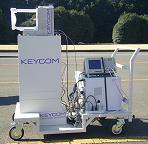 It measures RCS heading to targets while moving.
 It moves several times changing the height of radar for RCS, and heading to targets and it measures it. The multipass of the road and the run way can be greatly removed by this. |
| RCS imaging evaluation system |
| rat06 |
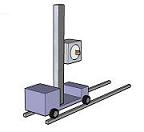 The visualization of the distribution of electromagnetic waves reflected from machines and other objects can contribute to the improvement of radiowave-absorbing materials and the shape of machines.
In addition, it is possible to compute the RCS for each part of the system or for the entire system by performing synthesis considering the phase of the reflected waves. |
| Digital Type Moving Target (MT for RT)ME7220DM-77G |
| rat12 |
KEYCOM privides you a wide range of support, from a development of radar to an evaluation of product at manufacturing line. |
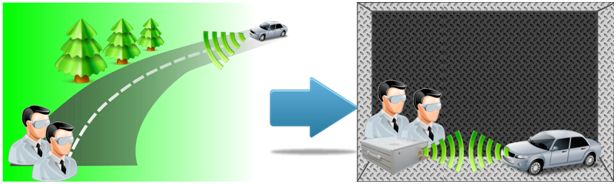 The full digitalization of radar wave response control allows a distance resolution 15cm step, and it also allows RCS Control responds to a distance change, with a high-precision and high-performance.